
Publish Date: 30 January, 2026
Author: Tim Phillips
Commercial Pet Doors Buying Guide: Kennels, Daycares & Breeders
If you run a kennel, daycare, or breeding facility, you already know this:
Your building gets used hard.
Dogs in and out all day. Staff moving quickly. Cleaning routines. Noise. Wear and tear. And in Canada — cold, heat, wind, and everything in between.
So when it comes to pet doors, the homeowner solutions you see online usually aren’t just a bad fit, they fail outright.
We’ve worked with a lot of pet businesses over the years, and the conversation usually starts the same way:
“We tried a standard pet door… it didn’t last.”
This guide is here to help you choose a commercial-grade pet door that actually holds up, without overcomplicating the decision.
Why Commercial Pet Doors Are a Different Category Entirely
Let’s clear something up right away.
A pet door that works fine in a quiet home with one dog is not designed for:
- Dozens of daily uses
- Multiple large or high-drive dogs
- Constant opening and closing
- Frequent washdowns
- Staff who don’t have time to baby equipment
Commercial environments are simply harder on hardware.
That’s why commercial pet doors need to be treated like infrastructure, not accessories.

Example: Commercial pet door wall installation.
The Most Common Problems We See in Commercial Settings
Before talking about what works, it helps to understand what usually goes wrong.
- Chewing and Damage
Flap-style doors are an easy target for bored or anxious dogs.
Once chewing starts:
- Seals fail
- Panels tear
- The door never closes properly again
- Poor Insulation
In winter, a constantly opening door becomes a major heat loss point.
This shows up as:
- Higher heating bills
- Cold zones in kennels
- Drafts staff notice immediately
- Noise
Flapping, rattling doors are more than annoying, they can increase stress in dogs and staff.
- Short Lifespan
Many “heavy-duty” doors still aren’t designed for commercial volume. Replacement every year or two adds up quickly.
What Commercial Facilities Actually Need
After seeing a lot of installs, and fixes, a few requirements consistently rise to the top.
- Rigid, Bite-Resistant Construction
Commercial pet doors should be built with:
- Solid panels (not flexible flaps)
- Reinforced frames
- Materials that don’t invite chewing
This alone eliminates most early failures.
- Reliable Self-Closing Mechanism
In a busy facility, doors must:
- Close fully every time
- Not rely on staff remembering to check them
- Stay aligned even with constant use
A door that doesn’t close is effectively a permanent opening, and that’s not workable in winter.
- Strong Weather Sealing
Commercial buildings often have large interior spaces, which makes heat loss more noticeable.
Good sealing:
- Reduces energy costs
- Keeps interior temperatures stable
- Makes staff work more comfortable
- Easy Cleaning & Sanitation
In kennels and daycares, cleaning matters.
Commercial doors should:
- Have smooth surfaces
- Avoid fabric or soft components
- Withstand regular cleaning routines
- Safety for Dogs and Staff
Doors should:
- Swing smoothly
- Not slam or snap shut
- Avoid pinch points
- Feel predictable to animals using them repeatedly
Consistency reduces stress, especially in group environments.
Wall, Door, or Partition: Installation Considerations for Businesses
Commercial installs differ slightly from residential ones.
Wall Installations
Often the most durable option.
Pros
- Strong structural support
- Excellent insulation potential
- Keeps main doors intact
Considerations
- Wall thickness
- Interior/exterior finishes
- Traffic flow inside the facility
Door Installations
Common between indoor/outdoor runs or yard access.
Pros
- Direct access
- Clear flow for dogs
Considerations
- Door material must support cutouts
- Reinforcement is critical
- Weather sealing matters even more with frequent use
Interior Partitions
Used between kennel areas or exercise zones.
These focus less on insulation and more on:
- Durability
- Safety
- Noise reduction
Why Bite-Resistant, Saloon-Style Doors Work Best in Commercial Settings
We try not to overuse brand names in guides like this, but it’s worth explaining why certain designs work better.
Saloon-style, rigid-panel doors:
- Don’t flap in the wind
- Close consistently
- Resist chewing
- Stay aligned under heavy use
They behave more like small doors than flexible openings — which is exactly what busy facilities need.
The Role of Professional Installation in Commercial Spaces
In commercial environments, installation isn’t just about convenience — it’s about risk management.
Professional installation helps ensure:
- Proper sealing and insulation
- Secure mounting in high-use areas
- Compliance with building materials
- Clean, professional finish
It also reduces downtime — which matters when your business depends on smooth daily operations.
Cost Considerations (And Why Cheap Doors Get Expensive Fast)
We’re often asked why commercial pet doors cost more upfront.
The honest reasons:
- Heavier materials
- Reinforced construction
- Longer lifespan
- Fewer replacements
- Lower maintenance
In most facilities, replacing a failed door once or twice quickly outweighs the cost of installing the right one from the start.

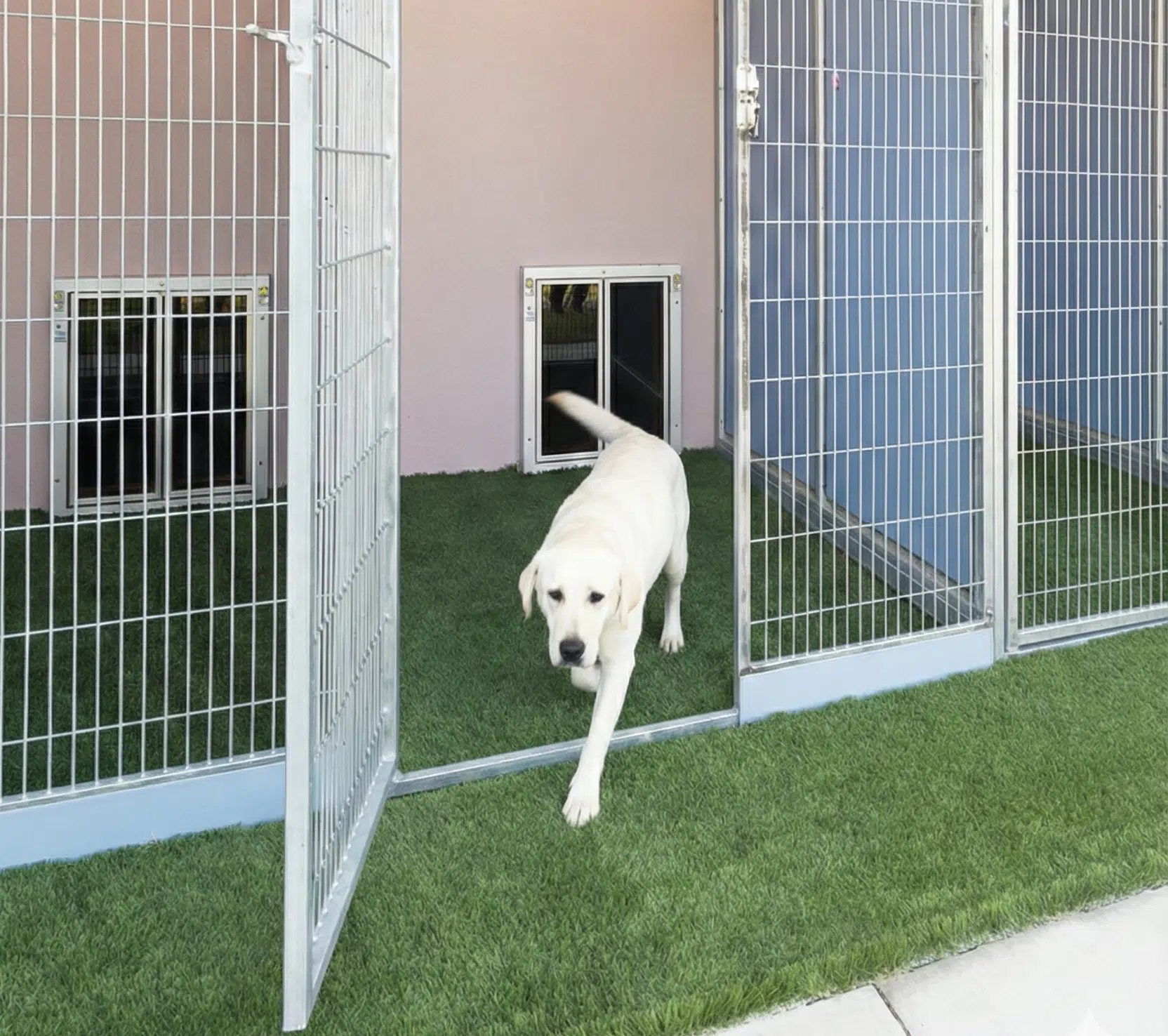
Example: Client BiteGuard KennelPlex® doors still in service after over a decade in use.
Which Facilities Benefit Most from Commercial Pet Doors?
We typically see the best fit in:
- Boarding kennels
- Daycares
- Breeding facilities
- Rescues
- Training centres
- Veterinary clinics (select areas)
Any place with repeated daily dog traffic benefits from doors built for volume.

Example: BiteGuard KennelPlex® installation at a Kennel.
How to Know If You’re Ready to Upgrade
A few signs it might be time:
- Doors don’t close fully
- Visible chewing or damage
- Noticeable drafts
- Increased noise
- Frequent repairs
- Staff frustration
These are usually signals the door has reached its limit.
If You’re Not Sure What Your Facility Needs Yet
That’s normal. Commercial layouts vary a lot, and there’s no one-size-fits-all answer.
A quick walkthrough (or even photos) usually helps us:
- Understand traffic flow
- Identify problem spots
- Recommend the right door type
- Avoid unnecessary work
No pressure — just practical advice.
Ready to Improve Flow, Comfort, and Durability in Your Facility?
If you’re considering upgrading or adding commercial pet doors, we’re happy to help you think it through.
