
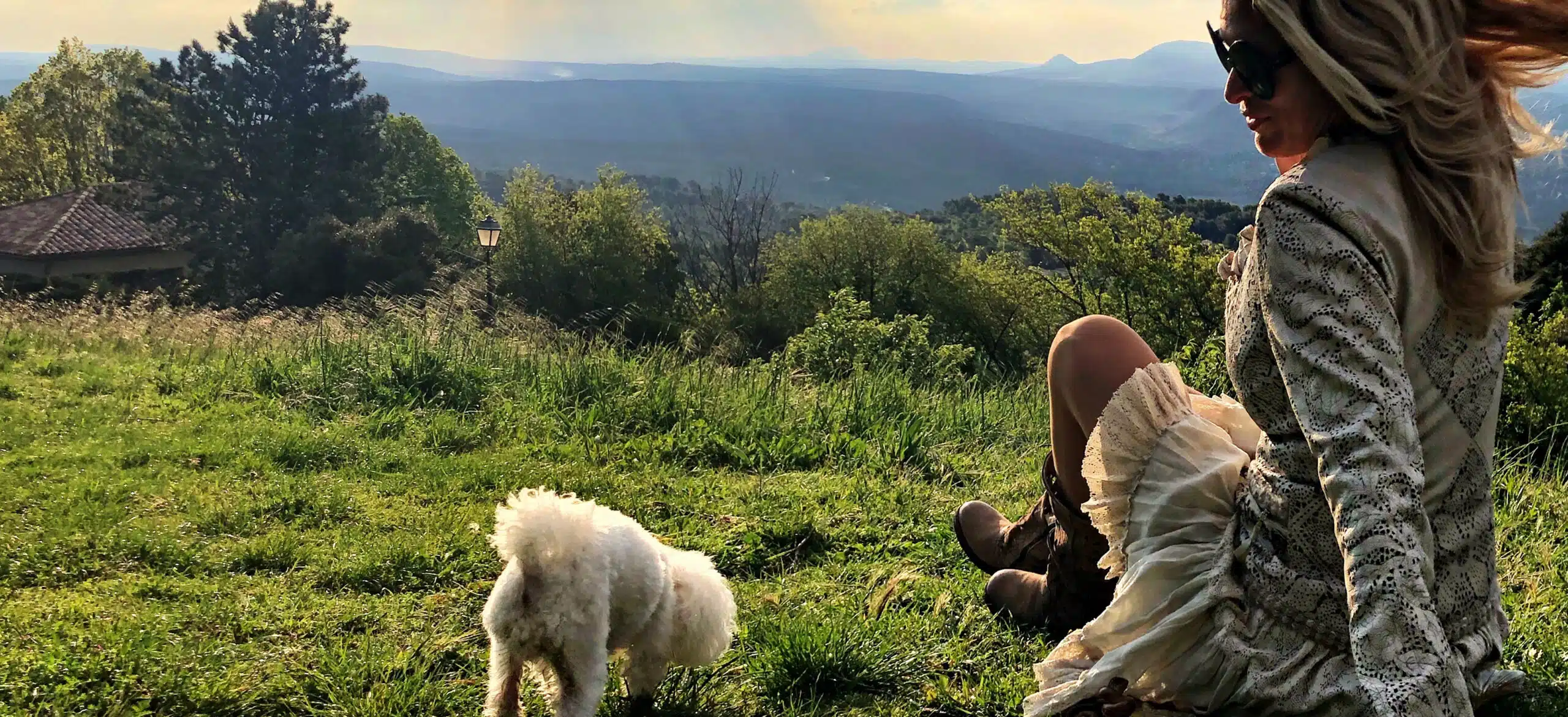
When Should You Choose a GPS Fence?
GPS fences are great when you can’t install wire — but they’re not as consistent as underground systems.

Large open land
without obstacles
GPS fences work best in wide, open spaces with clear sky view and minimal tree cover or buildings.

Seasonal Cabins
They’re a practical option for cabins or properties where installing a permanent fence is not possible.

Portable Needs
GPS systems are easy to move and reset, making them useful for travel or changing locations.

Temporary Setups
They can work well for short-term containment when a long-term solution isn’t required.

Limitations of GPS Fences.
Limitations of GPS Dog Fences
Signal drift
GPS boundaries can shift slightly over time, which may confuse dogs and require regular adjustments.
Weak in trees
Heavy tree cover, buildings, or terrain can interfere with GPS accuracy and responsiveness.
Boundary inconsistency
Unlike a fixed wire, GPS boundaries can vary day to day depending on signal conditions.
Frequent charging needed
GPS collars rely on rechargeable batteries that need consistent charging to stay reliable.
Bulky collars
GPS collars are larger and heavier, which may not be ideal for smaller dogs.
How GPS Dog Fences Work

Setup The Boundary Using Your Smartphone
Use an app on your phone to draw a virtual boundary around your property. Once it’s set, the collar uses GPS signals to understand where your dog is in relation to that boundary.

Train With Gentle Prompts
As your dog approaches the boundary, the collar gives a warning prompt to help them learn where the safe area ends. With consistent training, most dogs learn to turn back before reaching the edge.

Charge Regularly So Your Dog Stays Safely Home
GPS collars rely on battery power to work properly. Keeping the collar charged ensures the boundary stays active and your dog stays protected.
Our GPS Solutions

Dogtra GPS Fence

PFC 810 GPS Collar

Dogtra Pathfinder2 GPS tracking collar
Need help?
Talk to an expert
Frequently Asked Questions
Does GPS work in trees?
GPS works best in open areas. Heavy tree cover can reduce accuracy, which may cause the boundary to feel less consistent. For wooded yards, we usually recommend underground fences instead.
Does weather affect accuracy?
Rain and snow don’t usually cause issues on their own, but GPS accuracy can fluctuate depending on satellite signal conditions. That’s why GPS fences work best where boundaries don’t need to be extremely precise.
Is GPS good for stubborn dogs?
GPS can work for some dogs, but it’s not always ideal for strong-willed or high-drive dogs. Because the boundary isn’t as exact as a wired system, consistent training is especially important.
Will it work for my small dog or cat?
Some GPS collars are suitable for smaller dogs, but they’re generally not recommended for cats. Cats and very small dogs usually do better with underground fence systems that provide clearer, more consistent boundaries, and offer smaller lightweight collars.
Do I need to pay for a subscription?
Most GPS fence systems like Invisible Fence®, SpotOn®, and Halo® require a monthly subscription to access satellite networks and certain app features. All our GPS solutions are subscription-free with no hidden costs.
What shapes does GPS allow for my boundary?
GPS boundaries are typically circular or free-drawn within the app, but they aren’t as precise as underground fences. For simple layouts and large open areas, GPS can work well.
